Choosing a trampoline used to be simple. You picked a size, set it up on the lawn and let the kids jump. Today, families have a bigger decision to make: in-ground or above-ground? Both offer hours of outdoor fun, exercise and family time, but they differ in cost, safety, installation, appearance and long-term use. This guide compares the two side by side so you can choose the right trampoline for your yard and your family.
Table of Contents
ToggleWhat Is an Above-Ground Trampoline?
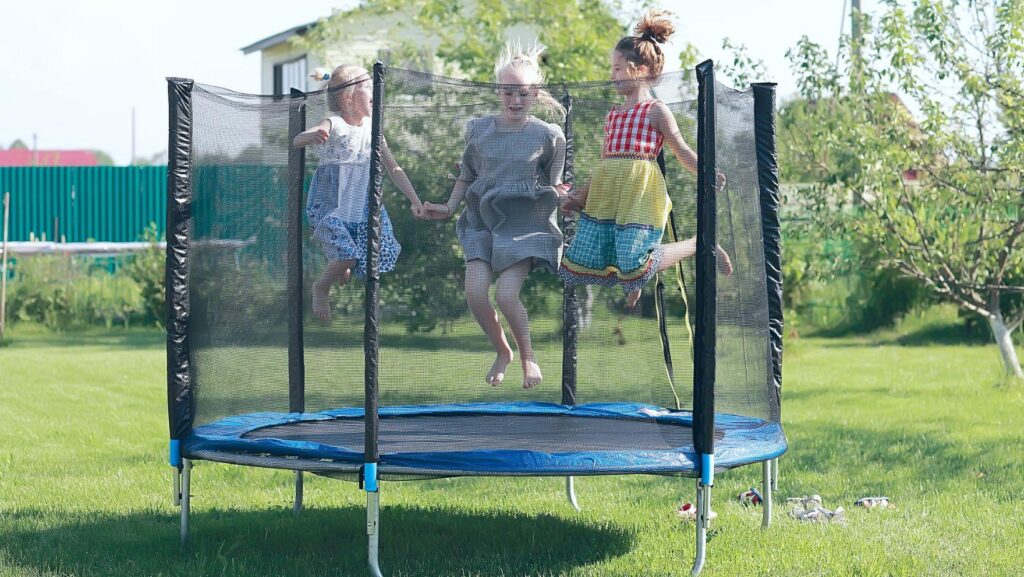
An above-ground trampoline is the classic backyard trampoline. The frame stands on legs, raising the jumping mat a few feet off the ground. Most models come with a safety enclosure net, and taller models often include a ladder.
Above-ground trampolines are the most common choice for families. They’re easy to set up, available in many sizes and shapes, and they fit a wide range of budgets.
What Is an In-Ground Trampoline?
An in-ground trampoline is installed in a pit, so the jumping mat sits level with the surrounding lawn. A retaining wall holds back the soil around the pit, and the trampoline’s frame and safety pads sit right at ground level.
In-ground trampolines have become increasingly popular with homeowners who want a cleaner backyard look and a lower, more accessible jumping surface.
Comparing the Two
In-ground: Because the mat sits at ground level, a jumper who comes off the trampoline has a much shorter fall than with a raised model. There’s no ladder to climb, which makes it easier and safer for younger children to get on and off. Many families feel more comfortable letting kids jump without an enclosure, though a safety enclosure can still be added for extra protection.
Above-ground: Modern above-ground trampolines are built with safety in mind. Most include an enclosure net and padded frames. However, the raised height means a fall off the edge, or a slip on the ladder, can be more serious, so a quality enclosure is essential.
Edge: In-ground, especially for families with young children.
In-ground: This is where in-ground trampolines really shine. They blend into the landscape and don’t block views from the house or patio. Many homeowners say an in-ground trampoline looks like a natural part of the yard rather than a piece of play equipment.
Above-ground: A raised frame and tall enclosure net are hard to miss. In a large backyard, this may not matter. In a smaller yard, an above-ground trampoline can dominate the space.
Edge: In-ground.
In-ground: In-ground trampolines generally cost more up front. They need a retaining wall system and are built for permanent installation. You also need to budget for digging, drainage and soil removal, whether you do it yourself or hire a contractor.
Above-ground: Above-ground trampolines are usually the more affordable option. They cover a wide price range, from budget-friendly family models to premium high-performance designs, and installation costs nothing beyond your time.
Edge: Above-ground.
In-ground: Installing an in-ground trampoline is a real project. It involves calling 811 to mark underground utilities, digging the pit, planning drainage, assembling the retaining wall, and leveling and backfilling around the frame. Many families hire a landscape contractor, while handy homeowners often complete the job themselves with a rented mini excavator.
Above-ground: Most above-ground trampolines can be assembled in a few hours with basic tools and an extra pair of hands. There’s no digging and no drainage to plan.
Edge: Above-ground.
In-ground: Once it’s installed, it’s there to stay. Moving an in-ground trampoline means filling the old pit and digging a new one.
Above-ground: You can move it to a new spot, take it with you when you move house, or take it down and store it if needed.
Edge: Above-ground, especially for renters or families who may move soon.
Both styles can deliver an excellent bounce. In-ground trampolines need proper airflow so that air under the mat can escape when someone lands. Quality in-ground systems handle this with vented safety pads or ventilation gaps. When installed correctly, a premium in-ground trampoline can bounce just as well as an above-ground one.
Edge: A tie, as long as the in-ground model is installed properly.
In-ground: Check the pit periodically for standing water, leaves and debris, and make sure the surrounding ground stays level. Good drainage at installation prevents most problems.
Above-ground: Inspect the enclosure net, springs, mat and pads each season. Above-ground trampolines can also be more exposed to strong winds, so anchoring them is a good idea.
Edge: Roughly equal, with different priorities for each.
Which Should You Choose?
An in-ground trampoline may be right for you if:
- You have young children and want the lowest possible jumping height
- You care about how your backyard looks
- You own your home and plan to stay for years
- You’re ready to invest in installation for a long-term upgrade
An above-ground trampoline may be right for you if:
- You want a more budget-friendly option
- You’d like a quick, simple setup with no digging
- You rent your home or may move in the near future
- Your yard has rocky soil, a high water table or poor drainage
The Bottom Line
There’s no single right answer. Both in-ground and above-ground trampolines give your family a fun, active way to spend time outdoors. If safety, looks and a permanent backyard upgrade are your top priorities, an in-ground trampoline is hard to beat. If budget, simplicity and flexibility matter most, an above-ground trampoline is a fantastic choice.
Still not sure? Our trampoline experts can help you compare models, sizes and installation options so you can choose the perfect trampoline for your family.