Charleston’s coastal climate and growing metro area create unique security camera needs. Humidity, salt air, and intense summer heat put extra demands on outdoor equipment, while the region’s mix of historic downtown properties and suburban developments requires different installation approaches. Whether someone’s protecting a single-family home in Mount Pleasant or a condo downtown, finding a security camera company that understands local conditions makes all the difference. This guide covers what Charleston homeowners should look for, which companies deliver reliable service, and how to match features to specific needs without overpaying for unnecessary tech.
Table of Contents
ToggleKey Takeaways
- The best security camera company in Charleston understands local coastal climate challenges—humidity, salt air, and extreme heat—and specs equipment with IP65+ ratings and corrosion-resistant housings to prevent degradation within 18-24 months.
- Professional installation makes sense for complex setups like cable runs through finished walls or integration with existing systems, typically adding $150-300 per camera, but DIY wireless options from Ring or Arlo cost 50-70% less upfront for straightforward applications.
- Charleston homeowners should prioritize local service response times (24-48 hours) and permitting knowledge over brand names, as regional integrators like Low Country Security often solve weather-related issues faster than national chains with week-long wait times.
- Mid-range wired systems with 4-8 cameras and professional installation cost $1,200-2,500 installed, while high-end AI-powered systems with smart home integration range from $3,000-7,000+ and include features like human/vehicle detection that reduce false alerts by 90%.
- Modern security cameras should feature 4MP-8MP resolution for facial recognition beyond 15 feet, AI-powered smart detection to minimize alerts, two-way audio for deterrence, and local or cloud storage options—with Charleston’s competitive monitoring market offering rates slightly below the national average.
- Get three quotes minimum (one national company, one regional integrator, one DIY estimate), verify contractor licenses through South Carolina’s Department of Labor, and test camera views before installation to identify blind spots and prevent costly reconfiguration.
What Makes a Great Security Camera Company in Charleston
A solid security camera company in Charleston handles more than basic installation. They understand the Lowcountry’s weather patterns, know which systems hold up to 90% humidity, and can navigate HOA restrictions common in area neighborhoods.
Local service response time matters more than most people realize. When a camera goes offline during a storm or a DVR malfunctions, having a company that can dispatch a technician within 24-48 hours beats waiting a week for a national chain’s regional contractor. Companies with Charleston-based offices or dedicated service zones typically provide faster troubleshooting.
Permitting knowledge separates pros from amateurs. While most residential camera installations don’t require permits, some historic district properties and multi-unit buildings do. A company familiar with Charleston’s building codes and historic preservation requirements saves homeowners headaches.
System compatibility extends equipment lifespan. The best companies install systems that integrate with existing smart home setups (Z-Wave, Zigbee, HomeKit) rather than forcing proprietary ecosystems. This flexibility means homeowners can upgrade individual components without replacing entire systems.
Warranty support should include both equipment and labor. Standard warranties cover cameras for 1-3 years, but installation labor warranties vary widely, anywhere from 90 days to lifetime. Companies confident in their work offer at least one year of labor coverage.
Top Security Camera Companies Serving Charleston Homeowners
Several national and regional companies serve Charleston’s security camera market, each with different strengths. ADT maintains a local branch and offers professionally monitored systems with cellular backup, useful during power outages from coastal storms. Their equipment leans toward closed ecosystems, which limits third-party integration but ensures consistent performance.
Vivint specializes in smart home integration with touchscreen panels and AI-powered cameras that distinguish between people, vehicles, and animals. Their contracts typically run 42-60 months, which doesn’t suit everyone, but equipment quality matches the commitment. Installation crews handle everything from attic wiring to outdoor junction box mounting.
SafeStreets (an ADT authorized dealer) provides localized service with ADT’s equipment backbone. Response times often beat ADT corporate for service calls, and pricing structures include more flexibility for system customization.
Regional integrators like Low Country Security and Charleston Security Systems offer custom solutions without long-term monitoring contracts. These companies excel at complex installations, multiple buildings, gate camera integration, or professional security camera installation that requires conduit runs and concealed wiring. They typically work with commercial-grade equipment from Hikvision, Dahua, or Axis Communications.
For property managers or tech-savvy homeowners, Ring and Arlo represent capable DIY options with professional installation available through Angi-verified contractors. These systems lack the integration depth of professionally installed setups but cost 50-70% less upfront.
Professional Installation vs. DIY Security Camera Systems
Professional installation makes sense when running cable through finished walls, mounting cameras above 12 feet, or integrating with existing alarm systems. Installers provide proper weatherproofing, load-bearing mounting, and code-compliant electrical connections for powered cameras.
Expect professional installation to add $150-300 per camera beyond equipment costs. That includes cable runs up to 100 feet, mounting hardware, and basic configuration. Complex jobs, fishing wire through brick walls, installing network switches, or configuring VLANs for camera segregation, increase costs proportionally.
DIY systems work well for straightforward setups: wireless cameras mounted to wood or vinyl siding, locations with accessible attic or crawlspace access, and homes with strong Wi-Fi coverage. Battery-powered cameras from Ring, Arlo, or Blink install in under an hour per unit with basic tools: drill, 3/16″ masonry bit for brick, level, and a smartphone.
The compromise? Hybrid installation. DIY homeowners can mount wireless cameras themselves but hire security system installers for one or two wired cameras covering critical areas like driveways or back entrances. This approach saves money while ensuring key coverage points have reliable, hardwired power.
Key Features to Look for in Charleston Security Cameras
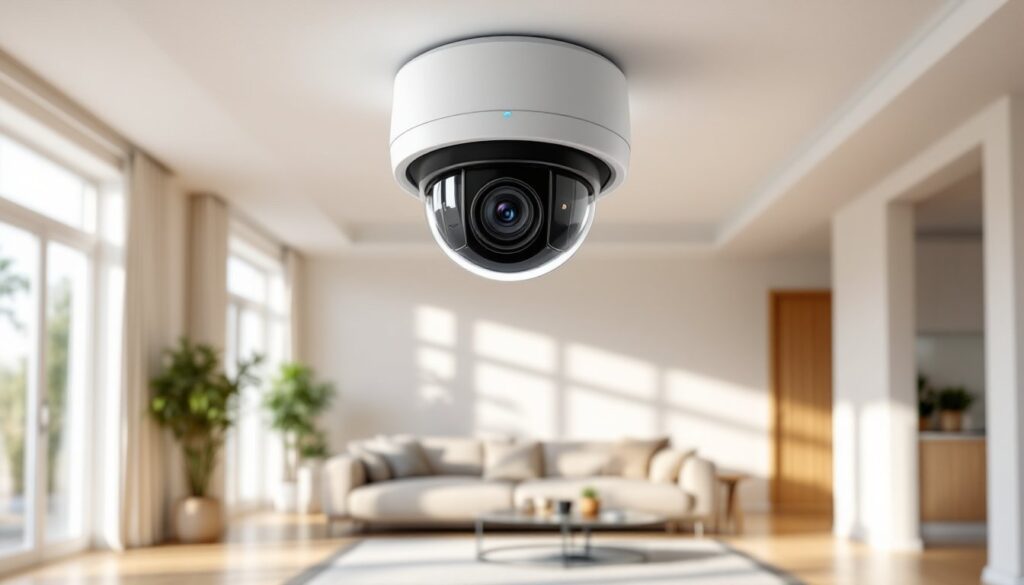
Charleston’s environment demands specific camera features. Resolution starts at 1080p minimum, lower resolutions don’t provide enough detail for facial recognition beyond 15 feet. Better systems use 4MP to 8MP cameras for driveways and front doors, where identifying delivery drivers or vehicles matters.
Night vision range varies dramatically. Basic infrared LEDs illuminate 20-30 feet adequately: enhanced models reach 60-100 feet. For long driveways or large yards, cameras with starlight sensors (extreme low-light capability) outperform standard IR, capturing color video in near-darkness.
Field of view determines camera count. A 110° wide-angle lens covers a standard two-car garage from a single corner mount. Narrower 75° lenses work better for focused areas like doorways but require more cameras for whole-property coverage. Varifocal lenses (adjustable zoom) add $50-100 per camera but provide installation flexibility.
Local vs. cloud storage affects ongoing costs. Local storage (DVR/NVR with hard drives) has no monthly fees but requires adequate capacity, figure 1TB per four 1080p cameras recording continuously for 30 days. Cloud storage runs $3-15 per camera monthly depending on retention period (7-60 days) and video quality. Many homeowners use both: cloud for critical cameras, local backup for the rest.
Smart detection separates modern systems from basic motion recording. AI-powered cameras distinguish humans from pets, vehicles from shadows, and packages from other objects. This cuts false alerts from 50+ daily to under five, making notifications actually useful. According to smart home technology experts, detection accuracy improved roughly 40% between 2024 and 2026 models.
Two-way audio proves surprisingly valuable, not for conversations, but for deterrence. A quick “we see you” through a camera speaker sends most porch pirates running. Look for cameras with noise cancellation: cheap speakers produce garbled, echo-filled audio.
Weather Resistance and Humidity Protection
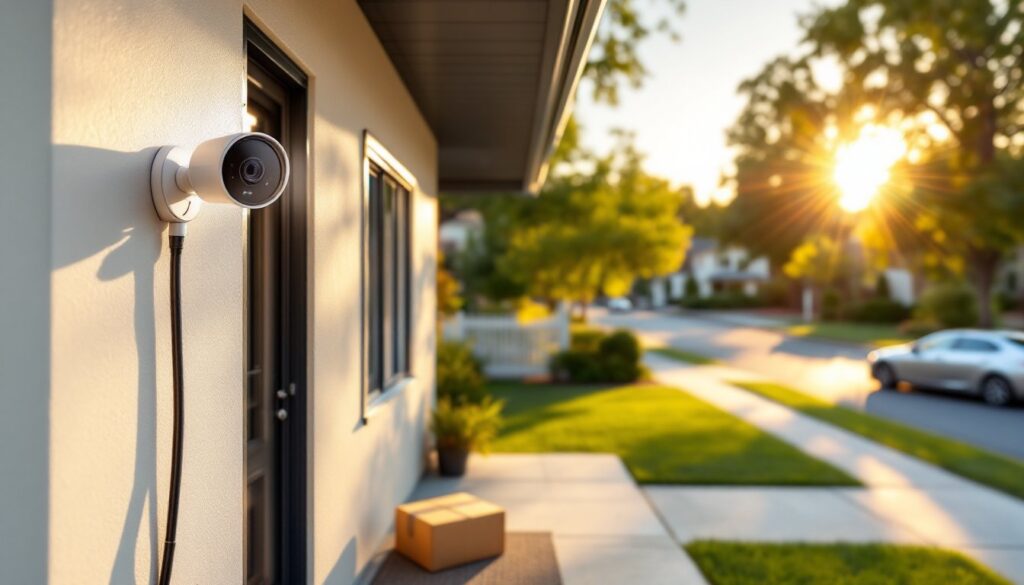
Charleston’s climate destroys inadequately protected cameras within 18-24 months. IP65 rating represents the minimum for outdoor use, protection against dust and water jets. Better installations use IP66 or IP67 cameras, which handle pressure washing and temporary submersion.
Corrosion-resistant housings matter near the coast. Aluminum housings corrode faster than stainless steel or impact-resistant polycarbonate in salt air. Companies familiar with coastal home security needs spec appropriate materials without upcharges.
Condensation prevention requires attention. Temperature swings between air-conditioned interiors and 95°F outdoor air cause moisture buildup inside camera housings. Quality cameras include desiccant packs or heating elements that prevent fogging. Installers should mount cameras with slight downward angles (water drainage) and use silicone sealant at all cable entry points.
Operating temperature range becomes critical in attics or south-facing walls. Standard cameras function between 32°F and 120°F: extended-range models handle -40°F to 140°F. Charleston attics routinely hit 130°F in summer, using standard equipment in those locations shortens lifespan by half.
Pricing and Service Plans: What Charleston Residents Can Expect
Equipment and installation costs vary based on system complexity. A basic four-camera wireless system (DIY installation) runs $300-600 for cameras plus $0-10 monthly for limited cloud storage. Professional installation of the same system adds $400-800.
Mid-range wired systems (4-8 cameras, local DVR, professional installation) cost $1,200-2,500 installed. This includes cable runs, a 1-2TB DVR, and basic system configuration. Homeowners own equipment outright with no mandatory monitoring fees.
High-end integrated systems (8+ cameras, NVR with RAID storage, smart home integration, AI detection) range from $3,000-7,000+. These systems typically include commercial-grade cameras, managed switches, battery backup, and comprehensive configuration. Installation takes 2-3 days for whole-property coverage.
Monitoring fees add recurring costs. Basic cloud storage runs $3-10 per camera monthly. Professional monitoring (24/7 alarm response, police dispatch) costs $30-60 monthly for video-verified systems. According to home service pricing data, Charleston monitoring rates run slightly below the national average due to competitive local markets.
Service contracts cover maintenance, software updates, and repair calls. Plans range from $10-25 monthly or $100-250 annually depending on system size. These make sense for complex systems or homeowners who want guaranteed response times, but simple DIY setups rarely need them.
Hidden costs include network upgrades and storage expansion. Older routers struggle with multiple high-resolution cameras, plan on upgrading to Wi-Fi 6 ($150-300 for a mesh system) for wireless setups with 5+ cameras. Storage expansion (additional hard drives, cloud tier upgrades) adds $50-200 annually as needs grow.
How to Choose the Right Security Camera Provider for Your Home
Start by evaluating coverage needs before talking to companies. Walk the property and identify critical areas: entry doors, driveway, side gates, basement windows. Most homes need 4-8 cameras for adequate coverage, though corner lots or properties with detached structures require more.
Get three quotes minimum, one national company, one regional integrator, and one DIY estimate for comparison. Detailed quotes should specify exact camera models, recording capacity, installation scope (cable runs, mounting heights, electrical work), and warranty terms. Vague “complete system” quotes usually hide subpar equipment.
Check contractor licenses through South Carolina’s Department of Labor, Licensing and Regulation. Security system installers need proper licensing for low-voltage work. Companies should carry general liability insurance ($1M minimum) and workers’ compensation for their crews. Reviews on platforms like CNET and local Better Business Bureau listings reveal patterns of service quality or complaints.
Ask about equipment ownership. Some companies subsidize equipment costs by locking customers into 3-5 year monitoring contracts, miss payments and they disable the system. Others sell equipment outright with optional monitoring. Know which model you’re buying into.
Test camera views before finalizing installation. Reputable installers temporarily position cameras and show homeowners live feeds via smartphone before permanent mounting. This prevents discovering blind spots after cables are run and walls patched.
Prioritize local support over brand names. A regional company that answers service calls within 48 hours beats a national brand with week-long wait times, regardless of equipment prestige. Charleston’s weather and property types create specific challenges, companies with local experience solve problems faster than out-of-state call centers reading troubleshooting scripts.